


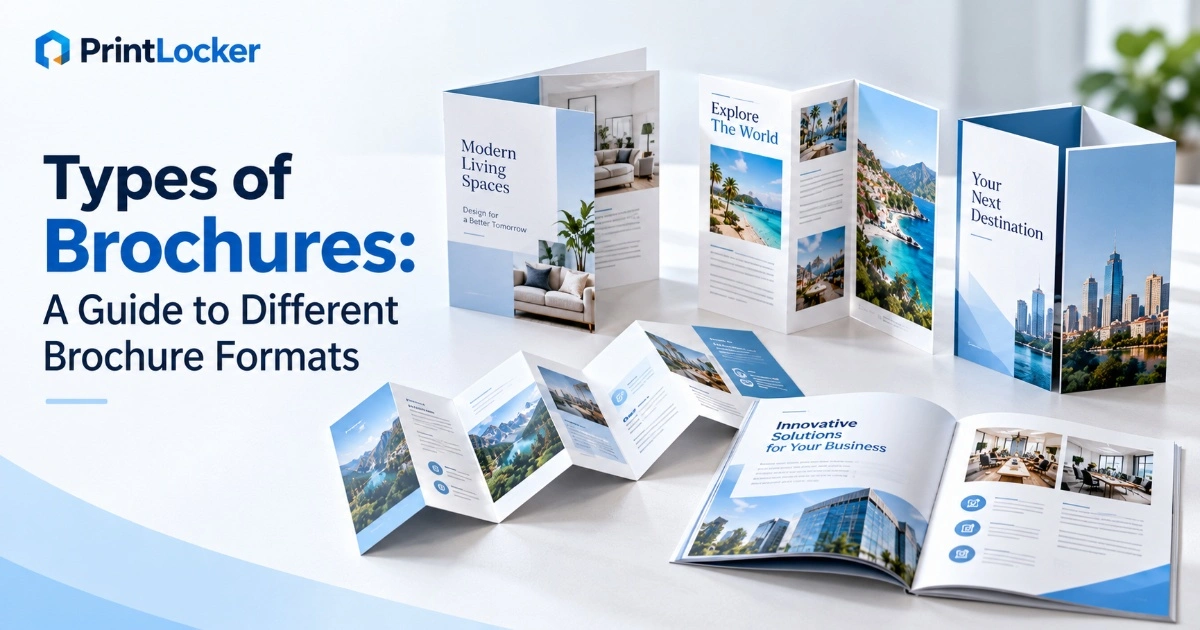
Brochures are an effective method of delivering details about your business, products, or services. These help businesses educate customers about their offerings, promote special deals, and provide useful details in printed form.
However, not all brochures serve the same purpose. Some brochures are created to give some main ideas and others allow using a bigger space for product descriptions, images, and company information. Knowing the varieties of brochures allows one to make the right choice in applying a certain type.
What Is a Brochure?
The brochure is a printed marketing material that is used to present information in an organized and easily readable manner. It can include text, images, product specifications, contact information and call to action.
Businesses commonly use brochures to:
- Introduce their products or services.
- Share company information with potential customers.
- Promote events, offers, or new products.
Brochures come in different sizes, layouts, and folding styles. The right choice depends on how much information you need to include and how you plan to distribute it.
Different sizes, layouts and folding styles are used for brochures, with the final choice depending on the volume of information that will be made available in the brochure and the method of its distribution.
What Are the Different Types of Brochures?
There are several brochure types, each offering a different way to organize information. Some have simple folds, while others provide multiple panels or several pages.
Bi-Fold Brochures
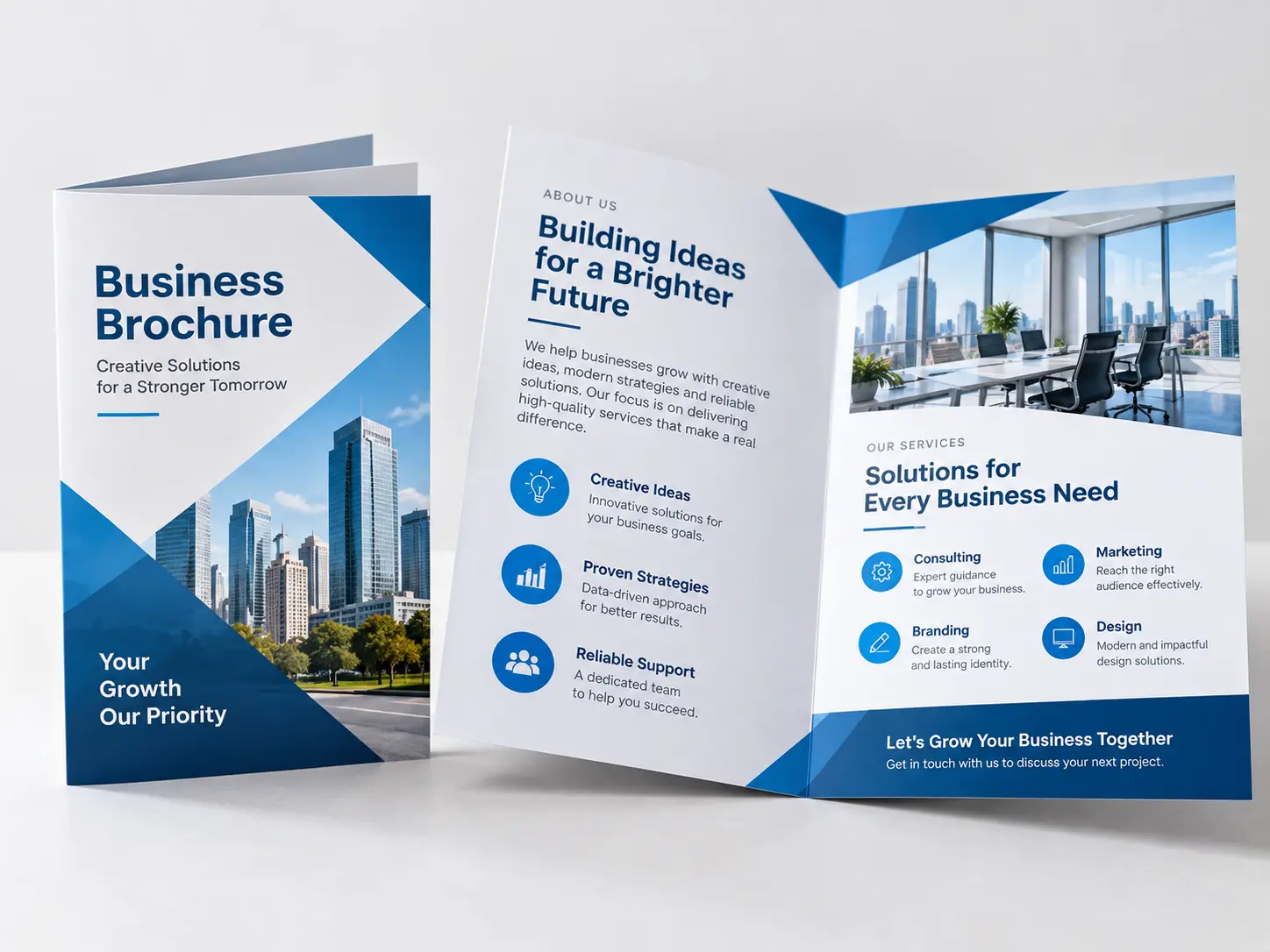
Bi-fold brochures are created by folding one sheet of paper in half, thereby producing four panels, with 2 on the outside and 2 on the inside.
It is a good choice for someone who wants a clear layout which has enough space for text and images, but is not too complicated by design.
Best uses:
- Company introductions
- Product overviews
- Restaurant menus
- Service information
Tri-Fold Brochures
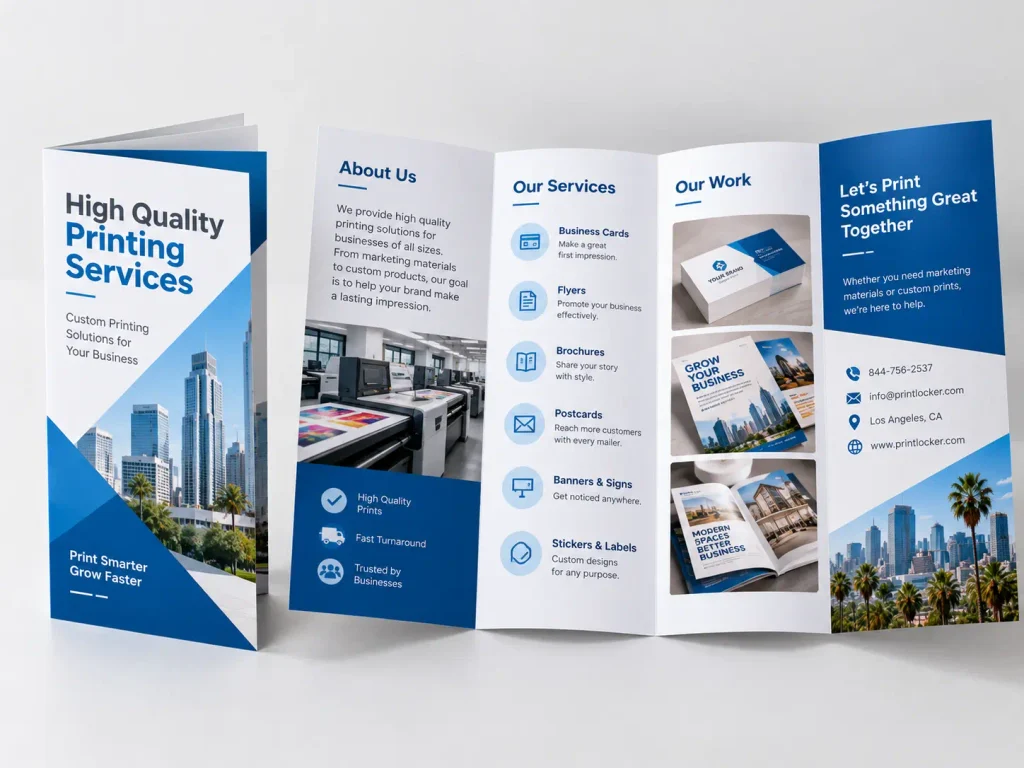
A tri-fold pamphlet is created by folding the paper into 3 panels. When it is opened it will provide you with 6 panels to properly present all necessary items.
This is a suitable structure if you want to separate information into categories, such as features, benefits, prices, and contact information.
Best uses:
- Business and service promotions
- Travel information
- Product highlights
- Event details
Z-Fold Brochures
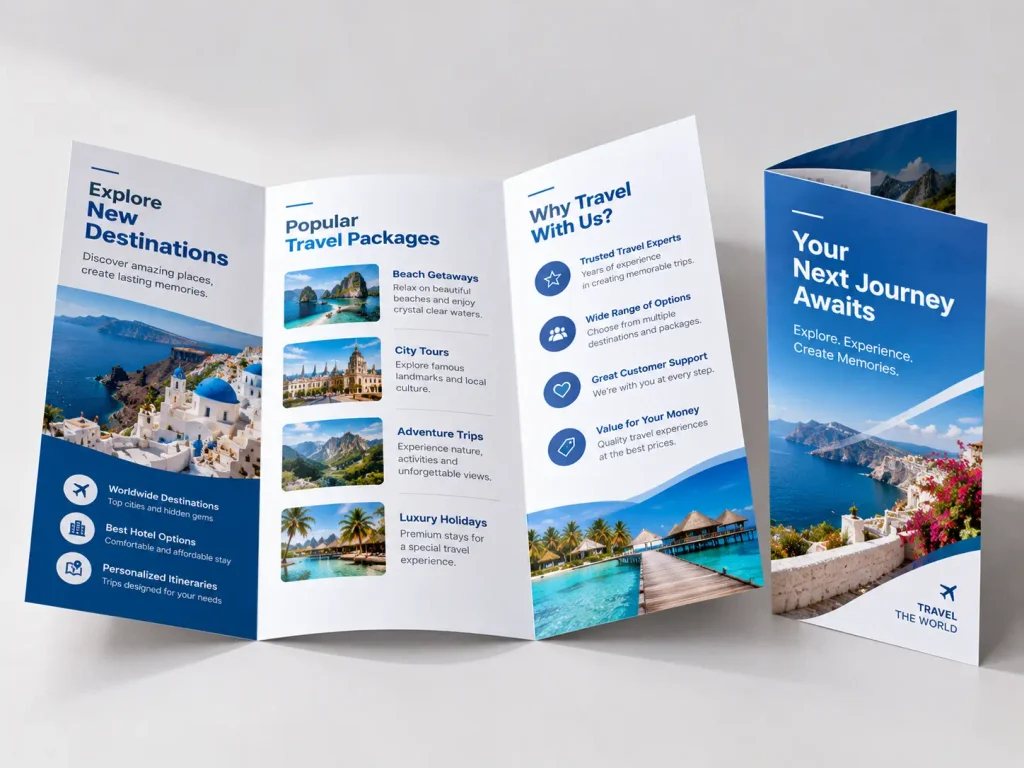
The Z-fold brochure is characterized by two folds that lead to a zigzag formation when opened. The panels unfold one after another, making it simple to convey information in a sequential order.
This format is helpful when your content can be presented in a particular sequence or when you want readers to read through a number of related sections.
Best uses:
- Product features
- Step-by-step instructions
- Event schedules
- Maps and travel guides
Gate-Fold Brochures
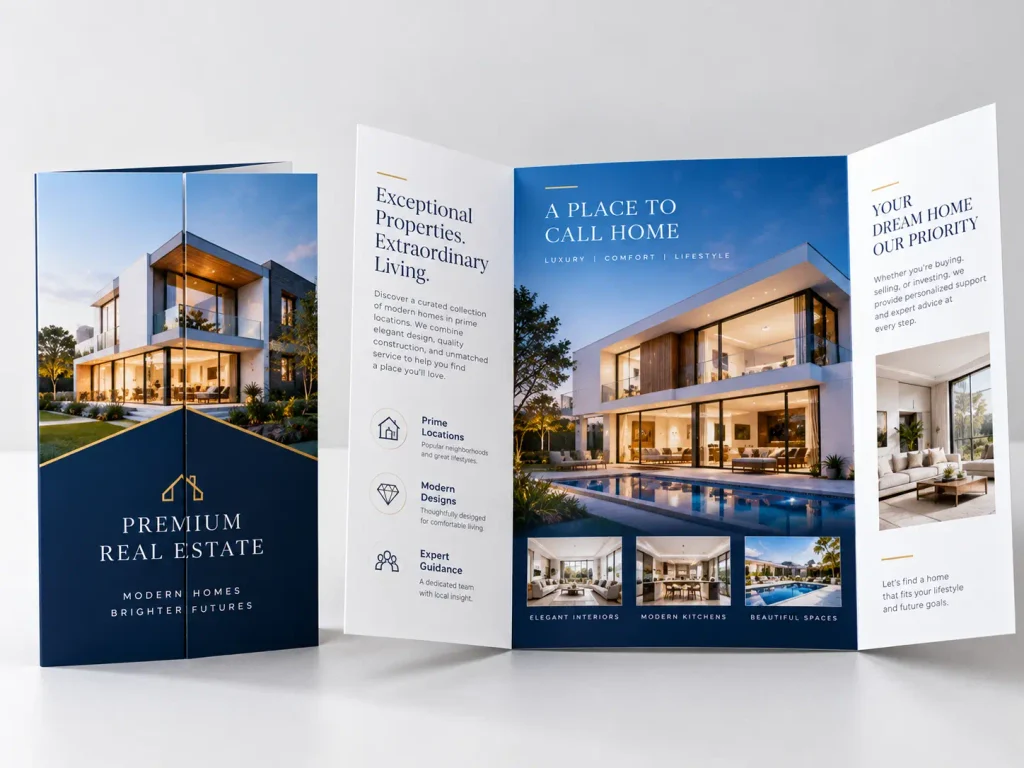
A gate-fold brochure has two outer panels that fold inwards and meet at the center. When the panels are opened, the key information hidden inside is revealed.
This makes for an eye-catching presentation that creates a fantastic first impression, be it for a product, service, or special offer.
Best uses:
- Product launches
- Premium product presentations
- Real estate promotions
- Special marketing campaigns
Half-Fold Brochures
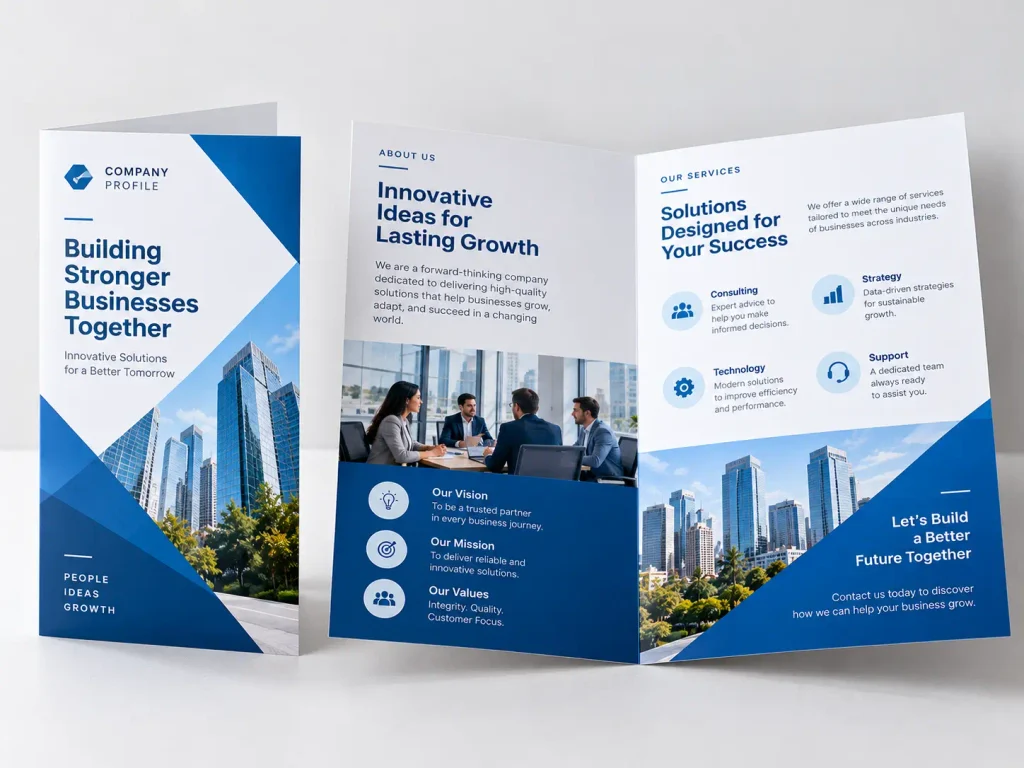
A half-fold brochure is created by folding a sheet of paper in half. This type of brochure is essentially the same as a bi-fold brochure but creates four separate panels for content.
Half-fold brochures are a good option for businesses looking for a simple design that allows them to make an introduction, convey their central message and provide contact information.
Best uses:
- Business introductions
- Event programs
- Informational handouts
- Product summaries
Accordion-Fold Brochures
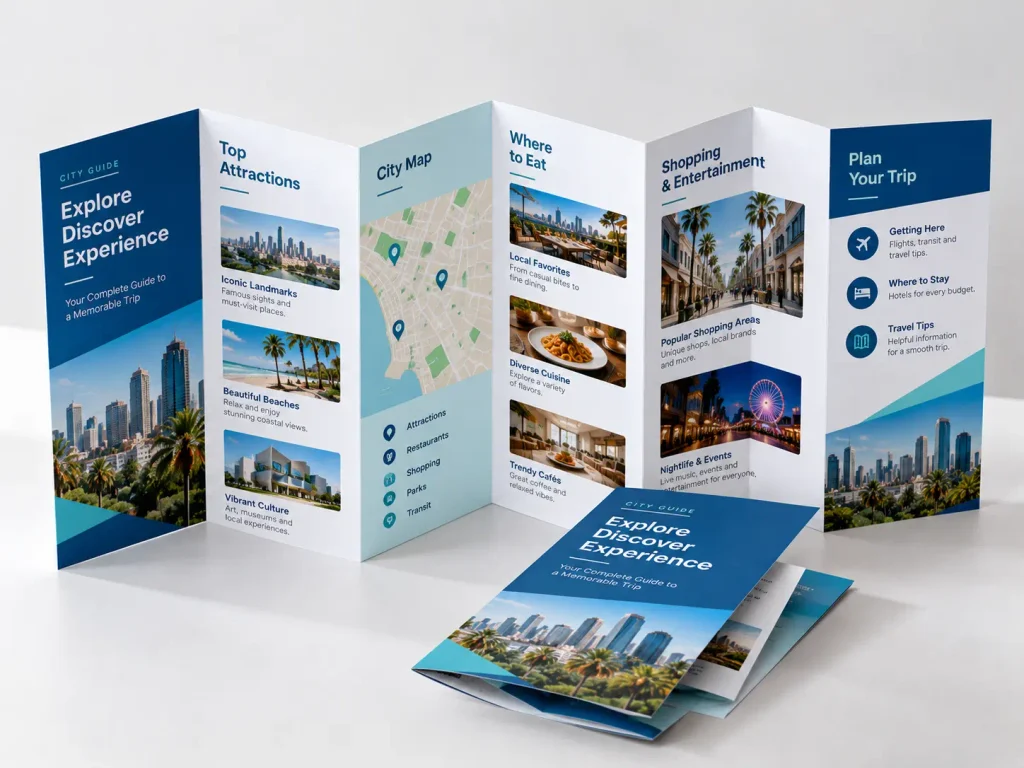
An accordion-fold brochure featuring many panels that are folded back and forth in alternating directions, expands when opened to unfold in a continuous manner.
This format is useful for content that benefits from a connected layout, especially when you need to present several related topics.
Best uses:
- Maps and guides
- Timelines
- Product collections
- Step-by-step information
Flyer-Style Brochures
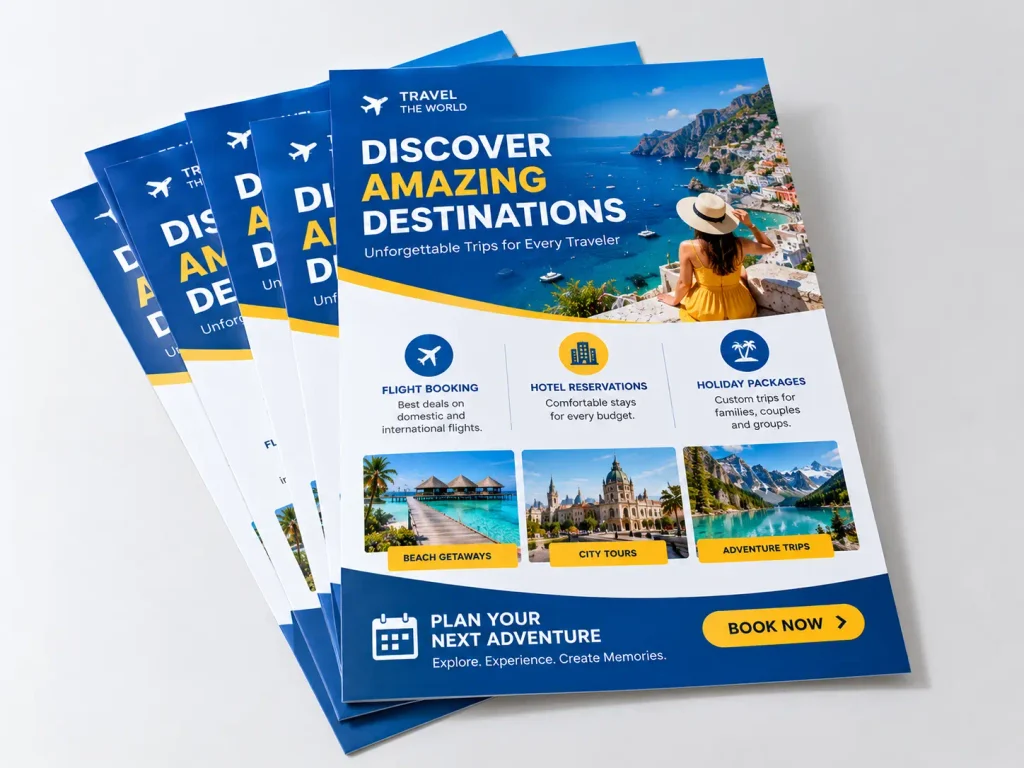
Flyer-style brochure is usually a single sheet that doesn’t use complex folds of any kind. It may have a headline, pictures, key benefits, and contact details.
It is a simple option for businesses to quickly send a message. Depending on the design, it may still be considered as a flyer rather than a traditional brochure.
Best uses:
- Promotional offers
- Store announcements
- Product introductions
- Local marketing campaigns
Booklet-Style Brochures
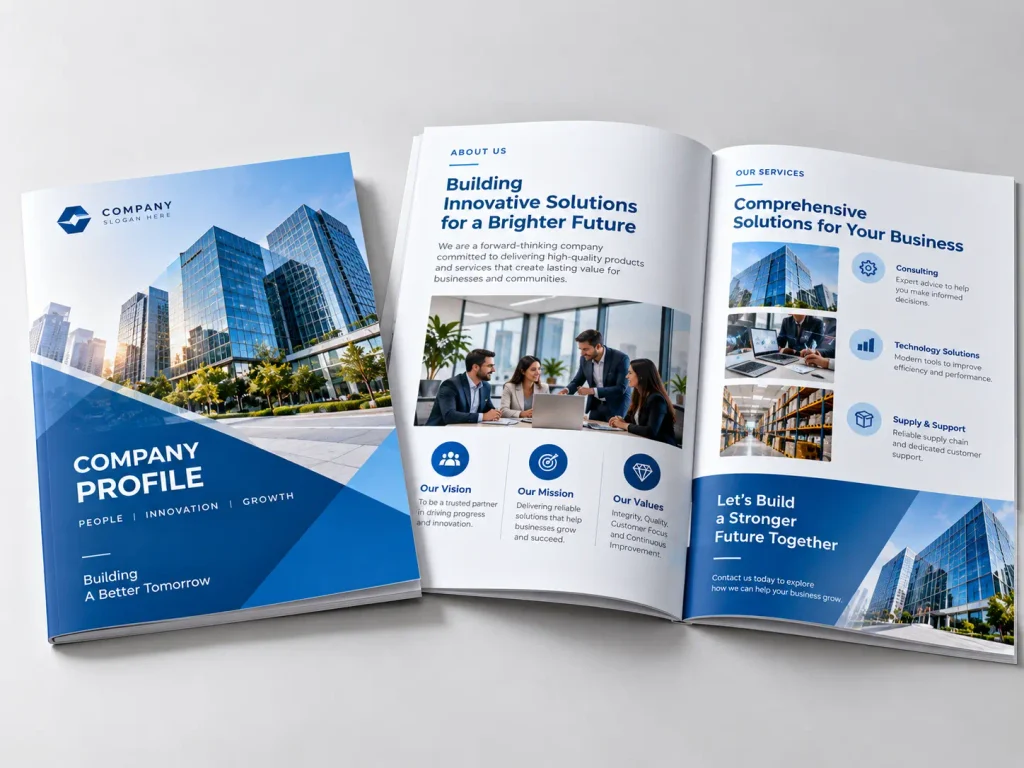
A booklet-style brochure contains multiple pages bound or assembled together. It provides more space than a single sheet and is more suitable for providing much detail about the information.
Businesses can make effective use of this format by dividing the content into sections and rendering its long pieces of information easier to browse.
Best uses:
- Product catalogs
- Company profiles
- Detailed service guides
- Training and informational materials
Types of Brochures Based on Their Purpose
Brochures may be divided according to the information they convey. While layout and fold do matter, it is important to have a clear idea of what the brochure aims to achieve when creating the content and choosing the design.
Marketing Brochures
Marketing brochures are meant to present a company, service, or product. The focus is usually on the key benefits, and readers are prompted to take a further step and visit the website or contact the organization.
Product Brochures
Product brochures provide information about the characteristics, advantages, specifications, and applications of a certain product or product line. The use of simple illustrations and short texts can considerably boost the understanding of the prospect.
Company Profile Brochures
The company profile brochure provides information about a company, its history, services, work experience, and contact information. It may be of great help at various events, such as meetings and networking events.
Event Brochures
Event brochures provide information about conferences, trade shows, fairs, and other professional events. They may contain details about dates, locations, speakers, or special features of the event.
Travel and Tourism Brochures
Travel brochures advertise places, activities, tours, hotels, and different travel packages. The use of illustrations, maps, and short descriptions allows one to choose from a range of options.
Service Brochures
Service brochures describe what a company has to offer, its target clients, and the first steps to take by the potential customer. These brochures are utilized in organizations that utilize professional services, companies, or small businesses.
How to Choose the Right Brochure Format
Selecting a suitable design of the brochure is determined by its content, customers, and goals of promotion. Before selecting a format, consider these three points:
- Amount of information: A bi-fold or tri-fold brochure may work for short content, while a booklet-style brochure is better for detailed information.
- Purpose: Choose a product brochure to highlight features or a company profile brochure to introduce your business.
- Distribution method: Consider whether you will hand out brochures at events, mail them to customers, or display them in your store.
Think about what readers need to know and choose a format that makes the information easy to follow.
Once you have selected the right format, consider your printing requirements, including paper quality, size, and finish. If you are preparing brochures for your business or marketing campaign, Brochure Printing in Los Angeles can help you explore printing options that suit your project.
Tips for Designing an Effective Brochure
A good brochure should look attractive and make its message easy to understand. Follow these simple tips:
- Keep the message clear: Use short sentences, meaningful headings, and relevant information.
- Use quality images: Choose clear photos and graphics that support your message.
- Make text easy to read: Use readable fonts, appropriate spacing, and a clear content structure.
- Include a call to action: Tell readers what to do next, such as visiting your website or contacting your business.
- Prepare the file for printing: Check the page size, image quality, bleed, and margins before sending your artwork to the printer.
If you are planning a business promotion, explore PrintLocker’s brochure printing services to find a suitable option for your project. Confirm the available sizes, folds, and printing specifications before preparing your final design.
If you need brochures for an upcoming meeting, event, or promotion, ask about same day brochure printing in Los Angeles. Availability may depend on the brochure format, order quantity, artwork readiness, and current production capacity, so confirm the turnaround time before placing your order.
❓ FAQs
Q1: What are the most common types of brochures?
Bi-fold, tri-fold, Z-fold, gate-fold, half-fold, accordion-fold, and booklet-style brochures are common formats used for business marketing and information sharing.
Q2: What is the difference between a bi-fold and a tri-fold brochure?
A bi-fold brochure is folded once to create four panels. A tri-fold brochure has two folds that create six panels, providing more sections for organizing content.
Q3: Which type of brochure is best for marketing?
The best brochure depends on your goal. Tri-fold brochures are useful for organizing several short sections, while bi-fold brochures work well for simple presentations. Booklet-style brochures suit more detailed content.
Q4: What type of brochure is best for product information?
A product brochure with clear images, key features, benefits, and specifications is a good choice. A booklet-style format may be more suitable if you need to cover several products in detail.
Q5: Can a brochure have multiple pages?
Yes. A booklet-style brochure can contain multiple pages, making it suitable for product catalogs, company profiles, and detailed service information.


