
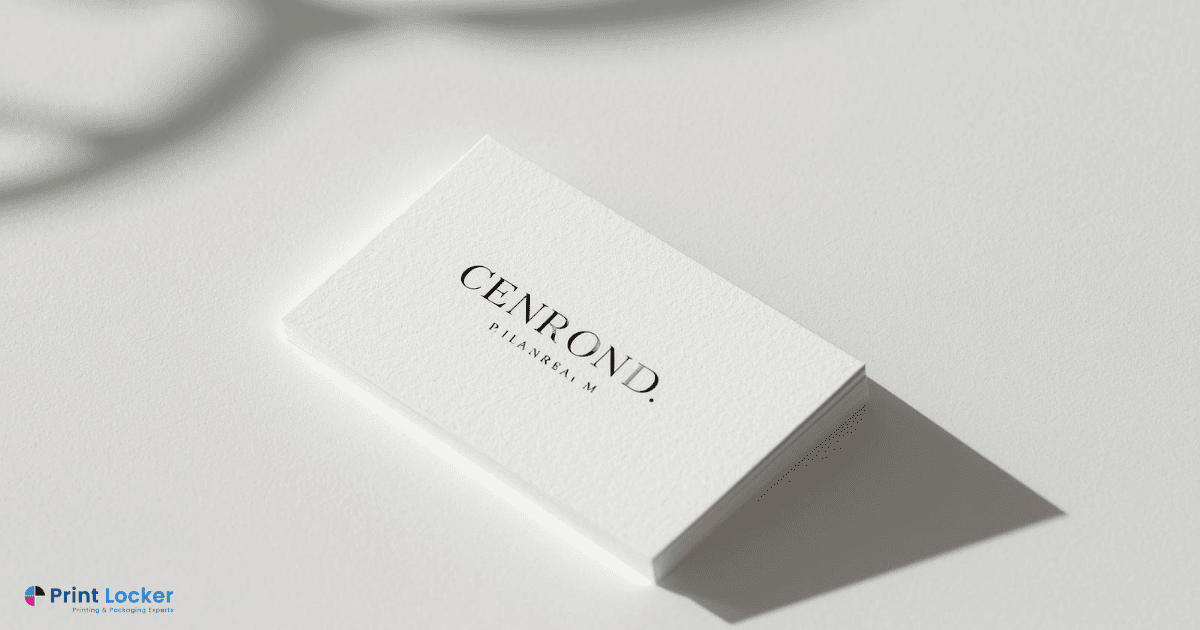
Most people don’t throw away a business card immediately.
They do something far more damaging.
They forget about it.
The average networking event, conference, trade show, or business meeting generates dozens of introductions. Within a few days, many of those business cards become difficult to remember. Names blur together. Companies become interchangeable. The conversation is forgotten.
This raises an important question:
If someone received your business card today, would they still keep it 30 days from now?
The answer has less to do with printing and more to do with psychology.
Businesses that understand business card design psychology focus on creating something worth remembering rather than simply sharing contact information.
The 30-Day Test Most Business Cards Fail
A business card has one job:
To make it easier for someone to remember you later.
Yet most cards are designed around information instead of memory.
They include:
- a name
- a title
- a phone number
- an email address
Technically, that’s enough.
Practically, it often isn’t.
People don’t remember information.
They remember impressions.
This is why many cards never survive the 30-day test.
What Happens After the Handshake?
Most business owners evaluate business cards at the moment they are handed out.
The real evaluation happens afterward.
Questions begin forming:
- Does this card feel important?
- Is this someone I might need later?
- Is this worth keeping?
Businesses investing in professional business cards in Los Angeles often focus on print quality because quality influences those decisions before a word is read.
People form opinions quickly.
A card’s physical presence contributes to those opinions.
Why Some Cards Stay on Desks
Look around most offices.
The business cards that remain visible are rarely random.
They’re usually connected to:
- trusted vendors
- valuable contacts
- memorable conversations
- strong first impressions
This is where business card retention becomes important.
A business card that remains visible continues working long after the meeting ends.
A card stored away immediately has already lost most of its value.
The Memory Gap Businesses Ignore
A common mistake is assuming people will remember the conversation.
In reality, memory fades quickly.
After:
- a conference
- a networking event
- a sales meeting
people often remember feelings more than details.
This is why effective business card design focuses on reinforcing recognition.
The goal is not simply to communicate information.
The goal is to reconnect someone to the original interaction.
Before vs After: The Retention Difference
| Card Type | Typical Result |
| Generic Card | Forgotten Quickly |
| Memorable Card | Kept Longer |
| Basic Design | Low Recall |
| Strategic Design | Higher Recognition |
| One-Time Contact | Future Opportunity |
The difference often comes down to whether the card creates a lasting impression.
Why Quality Still Matters
Business cards are one of the few marketing materials people physically hold.
Weight, texture, finish, and presentation all influence perception.
Businesses using premium business card printing for local businesses often discover that quality supports credibility.
People naturally associate quality materials with professionalism.
The card becomes a reflection of the business itself.
If the card feels disposable, people may subconsciously view the company the same way.
The Best Business Cards Do More Than Inform
Many cards focus exclusively on contact information.
The strongest cards communicate identity.
They answer questions such as:
- What makes this business different?
- Why should someone remember it?
- What problem does it solve?
This is where memorable business cards separate themselves from ordinary ones.
Information explains.
Identity sticks.
The Networking Reality
At a networking event, dozens of professionals may exchange cards.
Most of them look similar.
Same size.
Same layout.
Same content structure.
That’s why standing out matters.
Businesses investing in custom networking cards in Los Angeles often aim to create recognition rather than simply distribute contact details.
The objective isn’t collecting cards.
The objective is remaining memorable after the event ends.
Why Digital Hasn’t Replaced Business Cards
Despite digital tools, business cards continue to exist for a simple reason:
People still trust physical interactions.
A digital connection can disappear inside a crowded inbox.
A physical card remains visible.
This is one reason professional networking materials continue to play an important role in relationship-building.
Physical presence creates a different kind of recall.
The Real Question
Many businesses ask:
“How many cards should we print?”
A better question is:
“How many people will remember us after receiving one?”
That shift changes everything.
Businesses using high-quality business card printing services often achieve stronger results when they prioritize retention rather than distribution.
A memorable card doesn’t need to reach everyone.
It only needs to remain with the right people.
Final Thoughts
A business card is not a marketing brochure.
It is not a mini website.
It is a memory trigger.
The cards people keep for 30 days are usually the same cards they remember months later.
That’s why the most effective business cards focus on more than information. They focus on creating an impression worth revisiting.
Before printing your next batch, ask yourself one question:
Would someone still keep this card 30 days after meeting you?
The answer may reveal more about your networking strategy than you think.
Contact Us
The best business cards don’t just exchange contact details—they create reasons to remember your brand.
Contact Us to create a print that stays relevant long after the first handshake.
❓ FAQs
Q1: Why do some business cards get kept longer than others?
Cards that create a strong first impression, feel professional, and reinforce brand identity are more likely to be retained.
Q2: Does print quality affect business card retention?
Yes. Paper stock, finish, and overall presentation influence how people perceive a business.
Q3: Are business cards still effective today?
Absolutely. Physical networking materials continue to support relationship-building and brand recall.
Q4: What makes a business card memorable?
Strong branding, clear design, quality materials, and relevance all contribute to memorability.
Q5: Should business cards focus on information or branding?
Both matter, but branding often determines whether the card gets remembered.


