
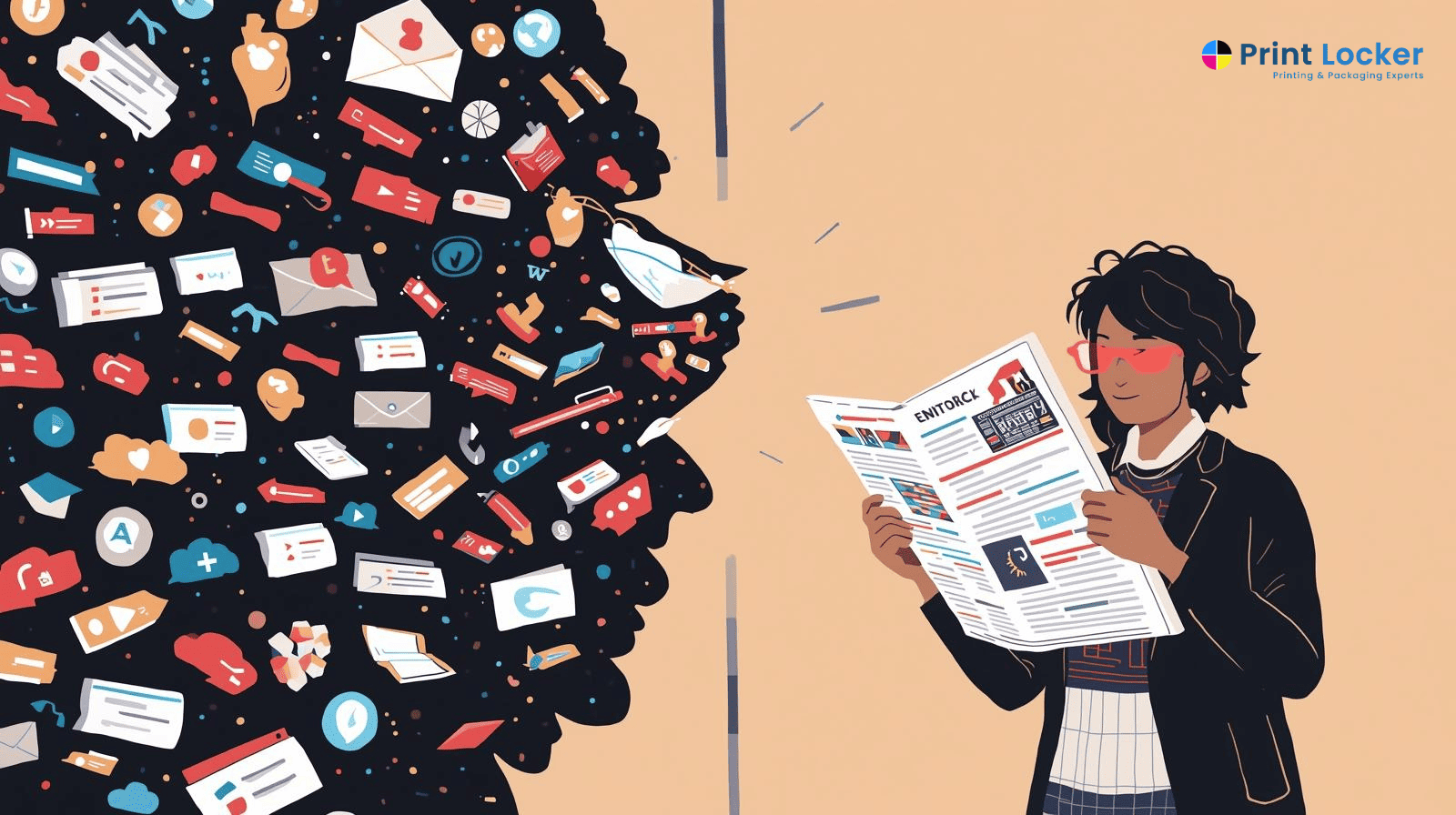
Every January, businesses notice the same pattern:
email open rates drop, paid ads underperform, and social media engagement becomes unpredictable. After weeks of holiday noise, customers mentally disconnect from screens—but they don’t disappear.
This behavioral shift is what marketers now call the January attention gap.Understanding how brands can stay visible during this period is a core part of January marketing strategies, and in 2026, one channel continues to perform consistently when digital slows—print.
———————————————————————————-
Why Digital Engagement Drops After the Holidays
The weeks following the holidays create a unique environment:
- Customers reduce screen time
- Inboxes overflow with promotions
- Ad fatigue carries over from Q4
- Decision-making slows temporarily
This is where digital fatigue marketing becomes visible. Audiences aren’t rejecting brands—they’re pausing consumption.
As a result, many businesses rethink print vs digital marketing during January to maintain visibility without overwhelming customers.
———————————————————————————-
Print Marketing in January: Why It Still Works
Unlike digital channels, print doesn’t rely on immediate interaction. Printed materials remain visible whether customers are actively browsing or not.
This is why print marketing in January performs differently:
- No algorithms
- No notification overload
- No time-based competition
- Longer physical presence
In periods of digital advertising slowdown, print fills the gap by offering calm, tangible communication.During low-attention periods like January, short-format materials such as Brochure Printing Services in Downtown often perform better because they communicate quickly without overwhelming the reader.
———————————————————————————-
Offline Marketing Strategies for Low-Engagement Periods
Brands that plan ahead use offline marketing strategies to stay present without pushing urgency.
Effective January print tactics include:
- Short-form brochures for quick reading
- Single-message postcards for instant recognition
- Minimalist layouts designed for low attention spans
These formats work because they respect how customers behave after the holidays.
This approach aligns well with modern print marketing strategy 2026, where timing matters as much as messaging.
———————————————————————————-
How Businesses Adjust Marketing After Holidays
Smart brands don’t stop marketing in January—they shift it.
Marketing after holidays focuses on:
- Visibility instead of conversion pressure
- Brand recall instead of sales urgency
- Simplicity instead of information overload
This is where print marketing for businesses becomes a stabilizing force, helping maintain awareness while customers reset routines.
———————————————————————————-
Why Print Reaches Customers When Digital Can’t
During January, customers still check mail, review printed materials at home or work, and notice physical branding without feeling interrupted.
This is why offline brand visibility remains strong even during low digital engagement periods.
Printed materials:
- Stay in physical spaces longer
- Are revisited passively
- Don’t require immediate action
This is critical when addressing customer attention after holidays.
———————————————————————————-
The Role of Brochures in the January Attention Gap
Brochures are especially effective during January because they balance clarity and brevity.
Short-format brochures:
- Communicate quickly
- Avoid overload
- Fit low-attention moments
This makes them ideal when businesses want to explain offerings without forcing decisions—an important factor in marketing during low engagement periods.
Many Downtown campaigns rely on custom brochure printing Services in Downtown to tailor messaging for post-holiday audiences who prefer clarity over complexity.
———————————————————————————-
Postcards and One-Message Visibility
When attention is limited, single-message formats perform best.
Postcards work because they:
- Deliver one clear idea
- Are read instantly
- Don’t demand follow-up
This simplicity supports print communication effectiveness, especially during January when audiences are easing back into work cycles.
———————————————————————————-
When Catalogs Become Relevant Again
As January transitions into February, attention slowly returns. This is when more detailed formats regain value.
Catalogs help when:
- Customers re-enter research mode
- Comparison becomes important
- Decisions move closer to action
This staged approach reflects how marketing behavior trends 2026 favor sequencing—not volume.
As customer attention gradually returns later in Q1, detailed formats like Catalog Printing Services in Downtown help businesses support comparison-driven decisions without rushing the buyer.
———————————————————————————-
Print vs Digital Marketing: A January Perspective
Rather than replacing digital, print complements it.
| Channel | January Performance |
| Lower engagement | |
| Paid Ads | Higher competition |
| Social Media | Inconsistent reach |
| Stable visibility |
This explains why many brands rethink print vs digital marketing specifically during January.
———————————————————————————-
Connecting Print to Long-Term Marketing Strategy
Print in January isn’t about instant ROI—it’s about presence.
Brands that stay visible during the attention gap benefit later when:
- Engagement returns
- Budgets unlock
- Customers resume planning
This long-term mindset defines effective print marketing strategy 2026.
For product-heavy or multi-service offerings, custom catalog printing services in Downtown remain valuable once customers move from awareness back into evaluation mode.
———————————————————————————-
Final Thought: Visibility Matters More Than Urgency
January isn’t a dead month—it’s a quiet one. Brands that understand the January attention gap don’t compete for clicks; they stay present.
By using print to support offline marketing strategies, businesses remain visible while customers mentally reset. When engagement returns, those brands are already familiar—and trusted.
If you’re planning January or early Q1 campaigns, understanding how print supports attention during slower digital periods can make the difference between being forgotten and being remembered.If you’re planning Q1 print campaigns and want guidance on choosing the right format for your audience, you can reach out through contact us to discuss your requirements before moving forward.
❓ FAQs
Q1: Why does marketing feel harder in January?
Customer attention shifts after the holidays, leading to lower digital engagement.
Q2: Is print marketing still effective in January?
Yes. Print maintains visibility without requiring immediate action.
Q3: Which print formats work best after holidays?
Brochures and postcards perform well due to simplicity and clarity.
Q4: Should businesses pause digital marketing in January?
Not pause—but rebalance alongside print.
Q5: Does print help with brand recall?
Yes. Physical presence increases recall during low-engagement periods.


