
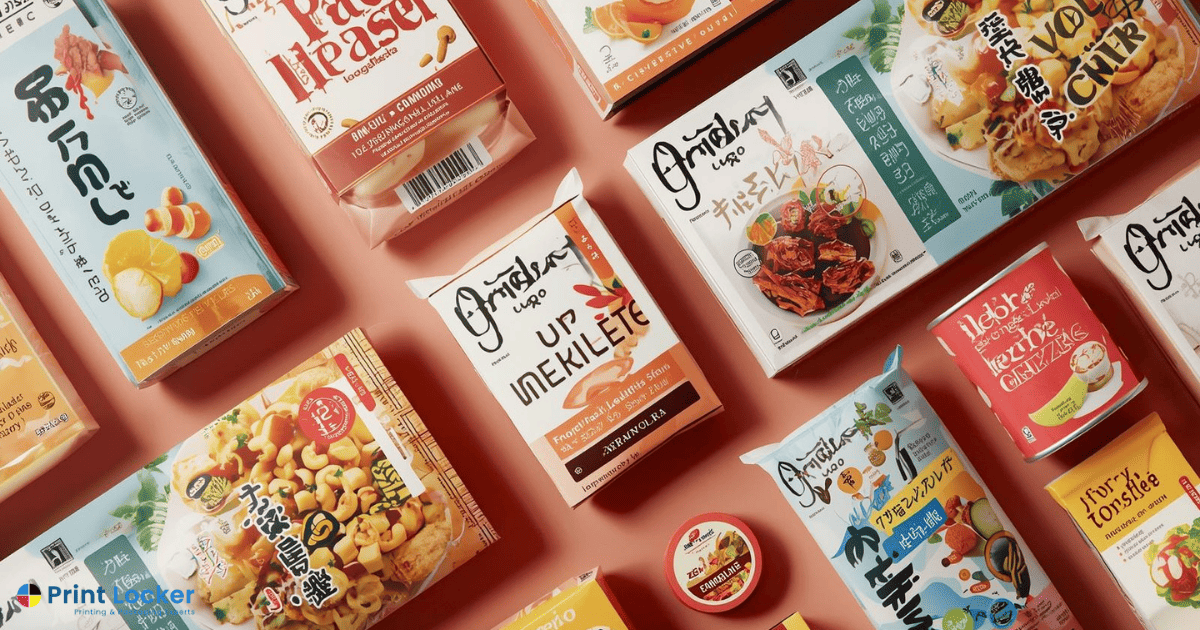
Most businesses believe that once the design is ready, the hard part is done. But in reality, the biggest issues in food packaging printing don’t start at design—they start during production.
The gap between what you see on screen and what you receive in hand is where things often break down. This is why businesses working with Custom Food Packaging in Los Angeles are now focusing more on execution, not just design.
🎯 The Misconception: A Good Design Guarantees a Good Print
Design files look perfect:
- Colors are vibrant
- Layout is clean
- Branding is clear
But when printed:
- Colors shift
- Details get lost
- Alignment feels off
Even high-quality custom food packaging projects can fail if the production process isn’t handled correctly.
🧠 Where the Breakdown Actually Happens
The printing journey has multiple stages—and each stage can impact the final result.
✔ 1. File Preparation Issues
Design files are often not optimized for print:
- Incorrect color mode (RGB instead of CMYK)
- Low-resolution images
- Missing bleed or margins
This directly affects custom printed food packaging, leading to unexpected output differences.
✔ 2. Material & Surface Compatibility
Not all packaging materials react the same way to ink.
Factors include:
- Coated vs uncoated surfaces
- Texture variations
- Absorption levels
This is where many businesses searching for food packaging printing near me in CA realize that material choice plays a major role in print quality.
✔ 3. Color Accuracy & Calibration
What you see on screen is not always what gets printed.
Without proper calibration:
- Colors may appear dull
- Brand tones may shift
- Consistency may break
This is one of the biggest challenges in food packaging printing.
✔ 4. Printing Method Selection
Different methods produce different results:
- Digital printing → flexibility, faster turnaround
- Offset printing → high consistency for bulk
- Flexographic → suitable for packaging materials
Choosing the wrong method affects durability and clarity in custom food packaging.
✔ 5. Bulk Production Variations
Samples often look perfect—but bulk production introduces challenges:
- Color inconsistency
- Alignment shifts
- Ink variation across batches
This is why businesses working with a custom food packaging company in Los Angeles prioritize quality control during scaling.
📉 Why Most Packaging Printing Fails
The failure is not due to design—it’s due to lack of coordination between:
- Design team
- Printing process
- Material selection
- Production control
Even businesses looking for Affordable food packaging in Los Angeles face issues when quality checks are skipped.
🖨️ What Smart Businesses Do Differently
Instead of focusing only on design, they focus on execution.
They ensure:
- Print-ready file preparation
- Correct material selection
- Method alignment with usage
- Quality checks before bulk production
This is where custom printed food packaging becomes consistent and reliable.
📍 The Importance of Process, Not Just Output
Printing is not a single step—it’s a controlled process.
Strong food packaging printing depends on:
- Pre-press preparation
- Accurate printing setup
- Post-production inspection
Ignoring any step leads to inconsistency.
⚡ How to Avoid Printing Breakdowns
To ensure better results:
✔ Prepare Files for Print
Always use CMYK, high resolution, and proper bleed
✔ Choose the Right Material
Match packaging with product type and print method
✔ Test Before Scaling
Approve samples before bulk production
✔ Work with Experienced Printers
Execution matters more than price
📊 Why This Matters in the USA Market
In the USA, packaging is part of the brand experience.
If printing fails:
👉 Brand trust drops
👉 Product value decreases
👉 Customers notice inconsistencies
This is why businesses treat custom food packaging as a critical part of their strategy—not just an operational step.
📌 Final Thoughts
A design file is just the beginning.
The real result depends on how well it’s executed from file to final print.
Businesses that understand this don’t just create designs—they ensure those designs translate perfectly into reality.Want reliable, high-quality packaging printing without production issues?
Contact Us to get started.
❓ FAQs
Q1: Why does my packaging look different after printing?
Because of differences in color modes, materials, and printing processes.
Q2: Is digital or offset printing better for food packaging?
It depends on quantity, material, and consistency requirements.
Q3: How can I avoid color mismatches?
Use CMYK files and work with calibrated printing systems.
Q4: Why do bulk prints differ from samples?
Scaling introduces variations if quality control is not maintained.


