
The role of digital marketing in the communication of businesses with their customers has been significant. Businesses are using various digital platforms, including social media, websites and emails in order to advertise their products and services. These channels were introduced to simplify the process of reaching customers and providing information.
But printed marketing materials are here to stay. A well-designed brochure, leaflet or postcard will be a great way for a business to send its message to customers in a paper medium. Rather than being replaced with digital marketing, print marketing can be used as an addition to it, meaning that opportunities for customer engagement can be significantly increased.
What Is Print Marketing?
Print marketing refers to the act of using actual printed materials with the aim of marketing a company, its product, its service or its special offer. The purpose of the materials is to convey necessary information and encourage the customer to act.
Businesses use different types of printed materials depending on their marketing goals, such as:
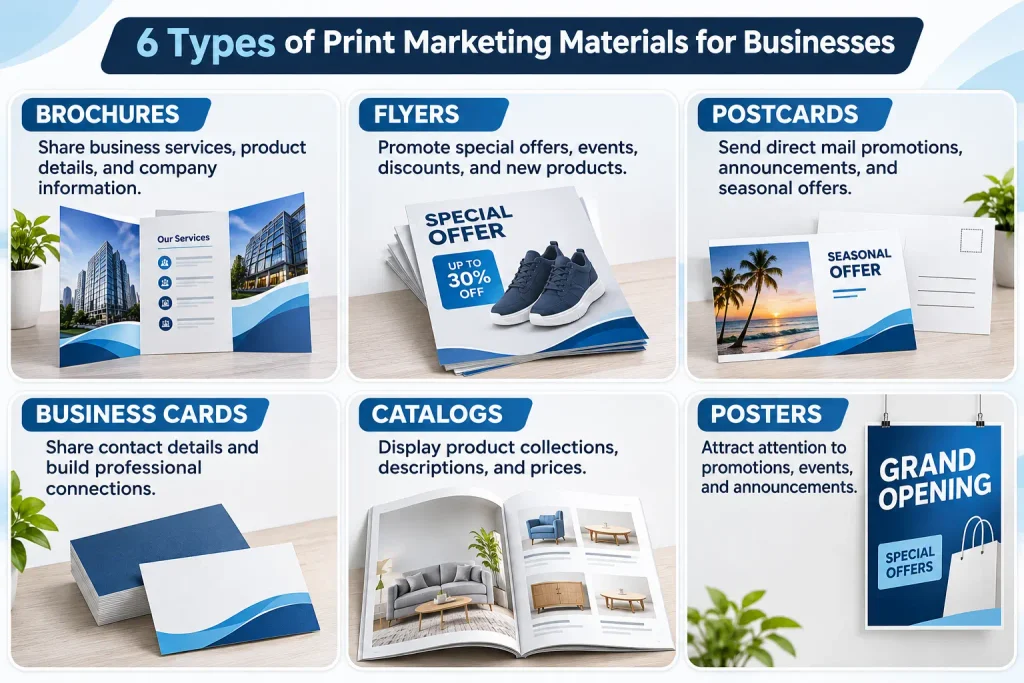
- Brochures: Share detailed information about a company, its services or products.
- Flyers: Promote events, discounts, new products and local offers.
- Postcards: Send promotional messages, announcements and special offers directly to customers.
- Business Cards: Share contact details and help people remember a business.
- Catalogs: Display a collection of products with descriptions and other useful details.
- Posters: Attract attention in shops, offices, exhibitions and public spaces.
Each type of material serves its specific objectives and makes it simpler for a company to select the right means of communication for its consumers and marketing.
Why Is Print Marketing Still Important in the Digital Age?
Creates a Tangible Brand Experience
One of the main benefits of print marketing is the fact that consumers can hold and interact with the material. Unlike online ads that may disappear in seconds, printed material such as a brochure or postcard can be saved for later use.
For example, a customer who goes to a shop may take a leaflet home to read about the offer. Similarly, a brochure can help someone learn about services of a certain company before making a choice.
Builds Brand Recognition and Trust
By having a consistent branding strategy, customers will not have a tough time recognizing a business. Printed materials allow for the creation of the same logo, color palette, font and visual style as that of the company’s website and social media accounts.
Through professional printing, the company is also able to give its marketing materials that well-groomed look. High-quality images, clear text and appropriate paper will surely make the marketing product more visually pleasing and legible. Maintaining a consistent look for all marketing products will help companies establish a well-recognized brand identity.
Reaches Customers Beyond Digital Platforms
It is not every time that consumers discover a company online. Print marketing can reach individuals in areas where online marketing may not be effective.
Businesses can distribute printed materials through:
- Retail stores, offices and reception areas.
- Trade shows, exhibitions and business events.
- Community gatherings and local events.
- Direct mail campaigns and customer packages.
- Promotional displays in suitable public locations.
These opportunities assist businesses in reaching local markets and sharing their offer with consumers who may not be familiar with their online promotions.
Makes Marketing Messages More Memorable
A good quality printed item encourages a consumer to engage more with the marketing message. A catalog, for example, can be saved to look at later, while a pretty postcard can remind customers about sales promotions.
Also, the quality of paper, layout of materials and writing all add to the experience. When a particular printed material provides some information aside from just promoting a product, then his product is more likely to be preserved for the future.
Supports Local Business Promotion
Print marketing can greatly assist those businesses that are attempting to reach local customers within a designated area. A restaurant can circulate flyers relating to the introduction of a new menu, while a retail outlet can mail out postcards about a current sale.
Flyers and posters also enable companies to promote their services to nearby locations, stores and events. By selecting the appropriate formats and distribution channels, the local marketing campaign can be more effective.
Different Types of Print Marketing Materials Businesses Can Use
Brochures
Businesses can turn to brochures when looking to describe their services, products or any other company information in greater detail. Brochures may have images, text, contact information and information on any special offers made by the company. Professional brochure printing allows companies to distribute information in a very organized way. Brochures are frequently used at meetings, exhibitions, stores and during customer visits.
Flyers
Flyers are an excellent option for short promotional messages with a focus on selling or promoting products. They are particularly effective when announcing special discounts, organizing events, launching new services or offering promotional items. Their simple format makes them an ideal choice for local promotions and distribution activities.
Postcards
Postcards have been widely used by marketers and businesses as an effective tool for direct marketing and to send announcements. Postcards can be sent to present or potential customers with offers, information about seasonal events, promotions etc. To effectively reach the local customers, businesses may choose to opt for Postcard Printing in Los Angeles for their promotional campaigns.
Business Cards
Business cards are still useful today in maintaining business relationships. They carry important information about the person such as name, name of the business, phone number as well as email and website.
Catalogs
Catalogs are useful in giving the companies the ability to provide the potential customer with information about a variety of products. They help in displaying images of the products, descriptions, prices and other related information. Companies with a number of products can leverage the use of catalog printing to present their products. Companies looking for Catalog Printing Services in Los Angeles can look for commercial printing services that would suit their product catalogs.
Posters
The purpose of the posters is to draw attention from afar. They can be employed by any commercial entity for advertising events, promotional activities in stores, product launches and important announcements to the public.
How Print Marketing and Digital Marketing Work Together
Print marketing and digital marketing can be used together in the same campaign as businesses can connect the physical materials with the online platforms in multiple ways:
- Add QR codes: Place a QR code on a flyer or brochure to direct readers to a website, product page or registration form.
- Include website and social media details: Help customers find the business online after seeing a printed advertisement.
- Promote online offers through postcards: Encourage customers to visit an online store using a special offer or promotional code.
- Maintain consistent campaign designs: Use similar colors, images and messages across printed materials, websites and social media advertisements.
- Track customer responses: Use unique QR codes or promotional codes to understand which printed campaigns generate visits or enquiries.
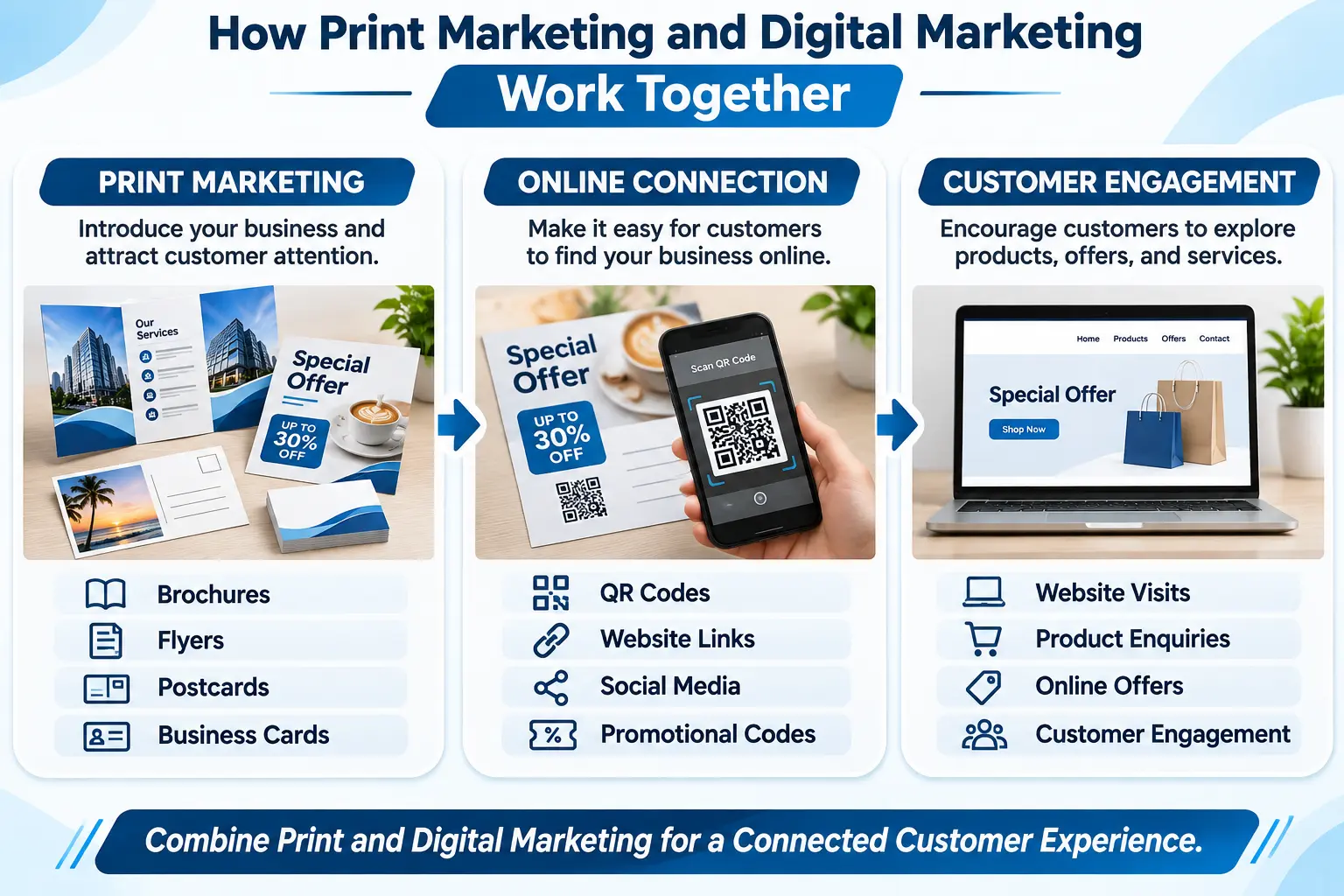
For example, when introducing a new product, a company can post an announcement on social networks and distribute paper flyers in nearby business outlets.
How to Create Effective Print Marketing Materials
A well-designed document should convey the intended meaning clearly and provide customers with important information about the company’s activities. Take into consideration several factors:
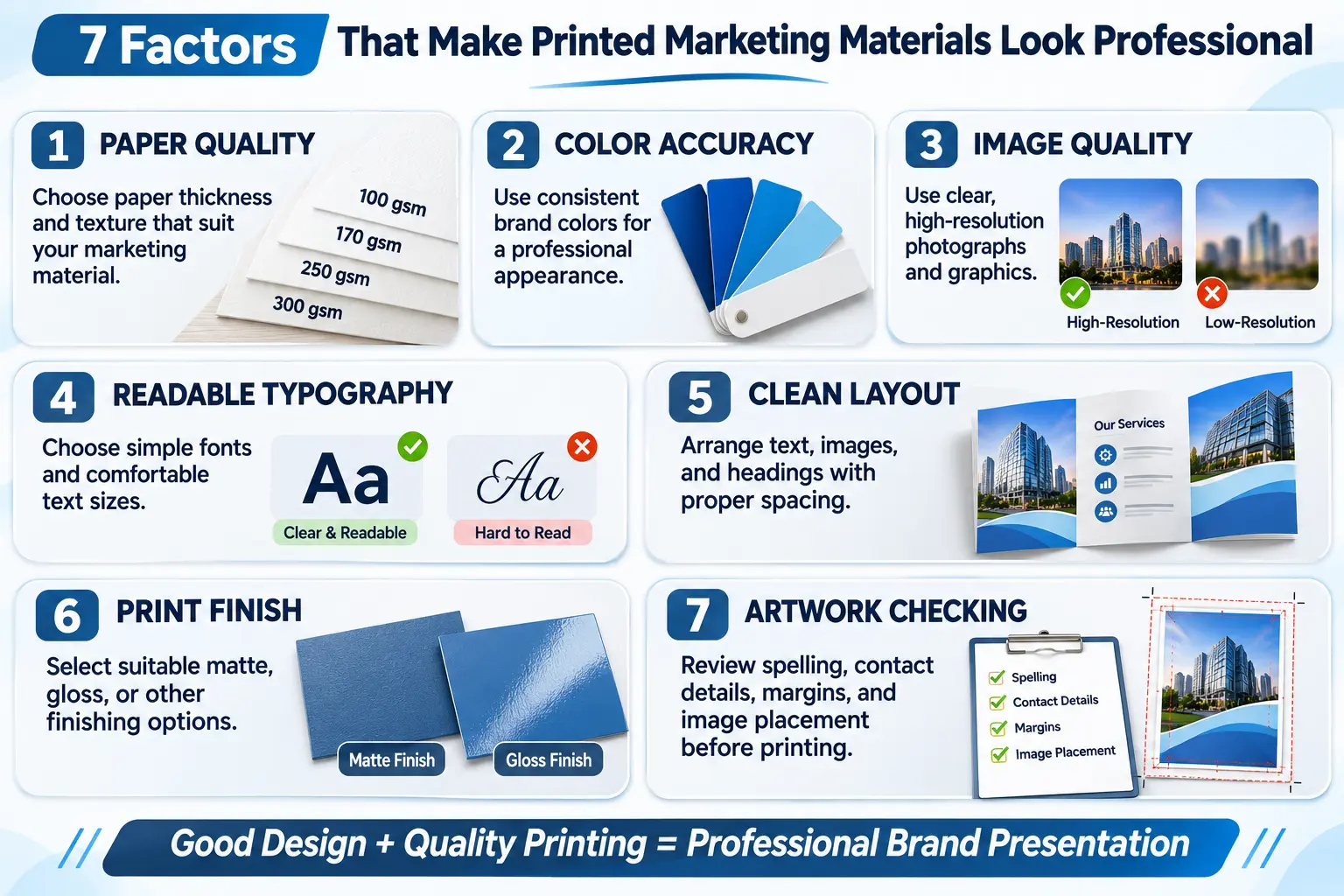
- Understand your target audience: Choose the message, design and format based on the people you want to reach.
- Select the right material: Use brochures for detailed information, flyers for quick promotions and postcards for direct communication.
- Write a clear message: Focus on the main benefit or offer instead of adding too much information.
- Use professional images and brand colors: Good visuals help make printed materials attractive and consistent.
- Keep the layout simple: Use readable fonts, proper spacing and clear headings.
- Choose suitable paper and finishes: Select options that match the purpose, budget and expected use of the material.
- Add a call to action: Tell readers what to do next, such as call, visit a website, scan a QR code or place an order.
- Check the final artwork: Review spelling, contact details, image quality, page layout and print settings before approving the design.
Common Print Marketing Mistakes to Avoid
Even a good promotional idea may not work well if the printed material is poorly prepared. Avoid these common mistakes:
- Adding too much text: Long paragraphs can make flyers and brochures difficult to read.
- Using low-quality images: Blurry photographs can affect the overall presentation.
- Ignoring brand consistency: Different logos, colors and fonts can make materials look unrelated.
- Choosing unreadable fonts: Small text and decorative typefaces may make important details difficult to understand.
- Missing contact information: Always include the details customers need to reach the business.
- Skipping artwork checks: Incorrect spelling, missing information or layout problems can lead to printing errors.
- Selecting the wrong format: A small flyer may not be suitable when customers need detailed product information.
Having enough time to look at the design before printing is essential for avoiding mistakes.
How Professional Printing Improves Marketing Results
As the quality of printed material can have a direct impact on the way customers perceive a brand, companies should pay attention to the way printed promotions look. Successful marketing materials are characterized by good images, colors and design.
Paper weight and finish are very important too. A business might choose light paper for wider distribution of flyers or a heavier stock for business brochures that should look more classy. It is the purpose, design and budget of every material that define what type of paper will be the best choice.
For businesses that want to run their marketing campaigns effectively, PrintLocker can offer printing solutions for business brochures, flyers, postcards, business cards, catalogs and posters. Depending on the requirements of their marketing campaign and art work type, businesses will be able to find printing solutions they need.
By opting for professional printing in their marketing strategy, businesses will provide excellent clarity of their message and consistent visibility of their promotional materials.
Print marketing remains an effective method of promoting products or services, even as digital mediums rise to the fore. Brochures, flyers, postcards, catalogs and other printed materials allow companies to convey information, increase brand awareness and interact with clients in person.
The key is to use both forms of promotion in ways that further the business’s aims. By adopting effective designs and printing techniques, companies can produce promotional materials that show professionalism. PrintLocker provides companies with opportunities for professional printing.
❓ FAQs
Q1: Is print marketing still effective in the digital age?
Yes. Print marketing can help businesses reach customers through physical materials such as flyers, brochures, postcards and posters. It is particularly useful for local promotions, events and direct customer communication.
Q2: What are the most common types of print marketing materials?
Common options include brochures, flyers, postcards, business cards, catalogs and posters. The right choice depends on the campaign's purpose and target audience.
Q3: How can small businesses benefit from print marketing?
Small businesses can use printed materials to promote local offers, share service information, advertise events and connect with customers in their communities. They can select formats and quantities that suit their marketing needs and budget.
Q4: Is print marketing better than digital marketing?
Neither is always better. Digital marketing is useful for reaching online audiences, while print marketing provides physical promotional materials. Using both channels together can help businesses reach customers in different ways.
Q5: How can businesses combine print and digital marketing?
Businesses can add QR codes, website links, social media details and promotional codes to printed materials. They can also use matching designs and messages across print advertisements, websites and social media campaigns.


